


Sewer Line Repair in Houston, TX: A 2026 Homeowner’s Guide
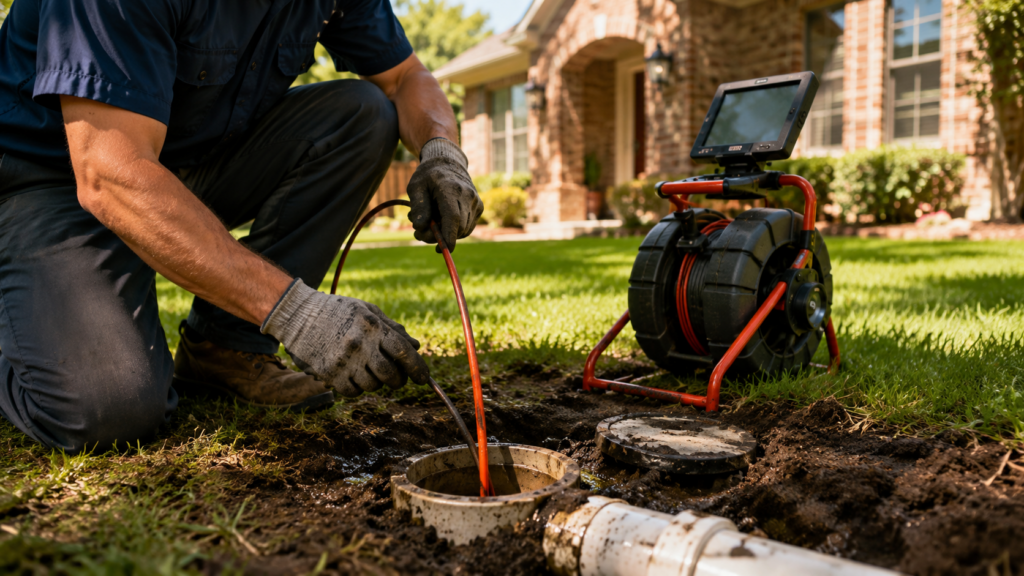
Sewer line repair fixes a damaged section of the underground pipe that carries wastewater from your home to the city’s sewer main. In Houston, most residential sewer trouble traces back to the same source, expansive clay soil shifting under slab-on-grade foundations and stressing the rigid pipe below. The right repair depends on what a camera inspection finds. A single cracked joint can often be handled with a targeted spot repair, while a collapsed or badly bellied line may need a section replaced or relined. The repair scope should follow the diagnosis. We have served Houston homeowners since 1956, and at Spring Branch AC we approach sewer work the way we approach HVAC: open the system up, confirm the real problem, and repair what can be repaired before anyone talks about replacement. For the under-slab failures common in Houston’s slab-foundation homes, our crews hand-dig tunnels beneath the slab to reach and repair the damaged pipe from the outside, which keeps the demolition out of your living space. Below, we cover what causes sewer line damage here, how to spot it early, how the repair is actually done, what it costs, and how to tell whether the line is your responsibility or the city’s. What a sewer line repair actually involves Your sewer lateral is the privately owned pipe that runs from your home’s plumbing out to the city’s main line. It usually sits under the yard, and in many Houston homes part of it runs beneath the concrete slab. When that pipe cracks, separates at a joint, or sags into a low spot, wastewater either backs up into the house or leaks into the soil underneath. Repair means fixing or replacing the failed portion of that pipe rather than tearing out the whole line. Depending on the diagnosis, that can mean a localized spot repair, a trenchless reline that creates a new pipe inside the old one, or digging and replacing a damaged section. The first step is always the same: see the actual condition of the pipe before choosing a method. Sewer work sits within our broader sewer and drain services, and every one of those jobs starts with a look inside the line. Why sewer lines fail in Houston homes Houston is hard on underground pipe. A few specific local factors do most of the damage. Shifting clay soil and slab foundations The Greater Houston area sits on expansive clay, the kind that swells when it absorbs water and shrinks when it dries out. Through a wet Gulf Coast spring and a dry late summer, that soil expands and contracts over and over. Rigid sewer pipe cannot flex with it. Over the years, that movement pulls pipe joints apart and creates low spots, known in the trade as bellies, where wastewater pools instead of draining. Eventually the pipe wall fractures. In slab-on-grade homes, the same soil movement that cracks a foundation also cracks the drain lines running beneath it. Once a pipe leaks, it saturates the surrounding clay, the clay swells more, and the next failure comes faster. Tree roots in the line Mature trees are the second common culprit. Roots chase moisture, and a sewer line full of warm water is a target. A root finds its way in through a small crack or a loose joint, then grows until it slows the flow or breaks the pipe open. One intrusion at a single joint is often a repair. Roots running the full length of an older line are a different situation, which we cover in the repair-versus-replace section below. Grease, wipes, and everyday clogs Not every sewer problem is structural. Plenty are blockages. According to Houston Public Works, about 70 percent of the city’s sanitary sewer overflows come from fats, oils, and grease combining with so-called flushable wipes, which do not break down the way toilet paper does. The city’s Protect Our Pipes guidance is blunt: flush only the three P’s, which are pee, poo, and paper, and pour cooled grease into a container for the trash. A clog and a cracked pipe call for different fixes. Clearing a stoppage with drain cleaning gets the line flowing again, but it does not repair a broken pipe. That is one more reason a camera inspection matters. It tells you whether you are looking at a blockage you can clear or structural damage you need to repair. Warning signs you may need sewer line repair Sewer problems usually show themselves before a full backup. Watch for: One or two of these can point to a simple clog. Several at once, or any sewage backup, points to a line problem worth inspecting. How a sewer line problem gets diagnosed A proper diagnosis comes before a repair quote. The baseline tool is a sewer camera. We run a waterproof camera on a flexible rod through an accessible cleanout and watch a live feed of the inside of the pipe, which shows root intrusion, scale, blockages, separated joints, and collapsed sections. Many camera heads also carry a transmitter, so a technician can trace the signal from above ground and mark the exact spot and depth of the failure. That keeps any digging targeted instead of exploratory. Our in-house sewer line video inspection is how we confirm what is actually wrong before recommending any work. Next to the cost of a major repair, an inspection is a small price for knowing exactly what you are dealing with. A camera has limits worth knowing. It only sees the inside of the pipe, so a line fully submerged by a belly or a downstream clog has to be cleared before the camera can see anything. It also cannot always catch a hairline crack that leaks into the soil without being visibly displaced. For suspected hidden leaks under a slab, plumbers add a hydrostatic test, which seals the line, fills it with water, and checks whether the level holds steady. If the water level drops, the line is leaking somewhere, and the test can be