

If your air conditioner is running but the house still feels damp and sticky, the system is cooling the air without pulling enough moisture out of it. In Greater Houston, the cause we find most often is a system that was oversized by a previous installer. It cools the house so fast that it shuts off before it can wring the humidity out. The good news is that the fix usually starts with a few inexpensive checks, not a new system.
At Spring Branch AC, we’ve been diagnosing humidity problems in Gulf Coast homes since 1956. Over those decades we’ve opened up plenty of systems that other companies wanted to replace, only to find the real issue was a clogged drain line, a low refrigerant charge, or equipment sized wrong for the home. This guide walks through what’s actually causing the dampness, what you can check yourself, and when it’s time to bring in a technician.
How Your AC Removes Humidity (and Why It Sometimes Doesn’t)
Your air conditioner does two jobs at once. It lowers the air temperature, which is what your thermostat reads, and it pulls moisture out of the air. The moisture removal is a byproduct of cooling. Warm, humid indoor air gets drawn across a cold evaporator coil, water vapor condenses on that coil the same way it beads up on a cold glass of iced tea, and the water collects in a pan and runs out through the condensate drain.
The catch is that the coil has to stay cold and wet long enough to do that work. The U.S. Department of Energy notes that an air conditioner which cools the air quickly but cycles off too soon leaves a room feeling damp and clammy even though the temperature dropped. Lowering the temperature is the easy part. Removing the moisture takes runtime.
What Should Indoor Humidity Be in a Houston Home?
For comfort and to protect your home, indoor relative humidity should stay below 60 percent, and ideally land between 48 and 52 percent. The EPA recommends keeping it under 60 percent because higher levels create the conditions for bacterial growth, dust mites, and damage to wood, finishes, and furnishings.
There’s a comfort cost too. Humid air feels warmer than it is, so when a house stays muggy, people tend to crank the thermostat down. That runs the system longer and the bill higher, and the house still feels damp, because lowering the temperature does nothing to pull moisture out of the air.
Why Houston Homes Feel Sticky Even With the AC On
Houston summers pile on a heavy moisture load. A system that’s even slightly off struggles to keep up here in ways it wouldn’t in a dry climate. The National Weather Service measures that mugginess using the dew point, the temperature at which air becomes saturated with moisture.
| Dew point | How the air feels |
| 55°F or below | Dry and comfortable |
| 55°F to 65°F | Becoming sticky and muggy |
| 65°F or above | Heavy moisture, oppressive |
Source: National Weather Service
Houston summer dew points routinely sit in that top, oppressive band. Local humidity often climbs above 90 percent in the early morning and eases to around 60 percent by mid-afternoon. All of that outdoor moisture means your AC has to do far more dehumidification work than a unit in Phoenix or Denver, and any weak point in the system shows up fast as a clammy house.
The Most Common Causes of High Humidity While the AC Runs
Most humidity problems trace back to airflow, the drain line, the refrigerant charge, or sizing. Here’s a quick map of the usual causes and who handles each one, followed by the details.
| Cause | What’s happening | Who handles it |
| Thermostat fan set to ON | The blower re-evaporates water off the coil back into the house | You |
| Dirty air filter | Restricted airflow can freeze the coil and stop dehumidification | You, or a technician if it’s iced |
| Clogged condensate drain | Standing water keeps the coil area wet | You to spot, a technician for deep clogs |
| Low refrigerant charge | The coil runs too cold and ices over | A technician |
| Leaky or disconnected ducts | Humid attic air gets pulled into the system | A technician |
| Oversized system | Cools too fast, shuts off before drying the air | A technician |
Start With the Simple Checks You Can Do Yourself
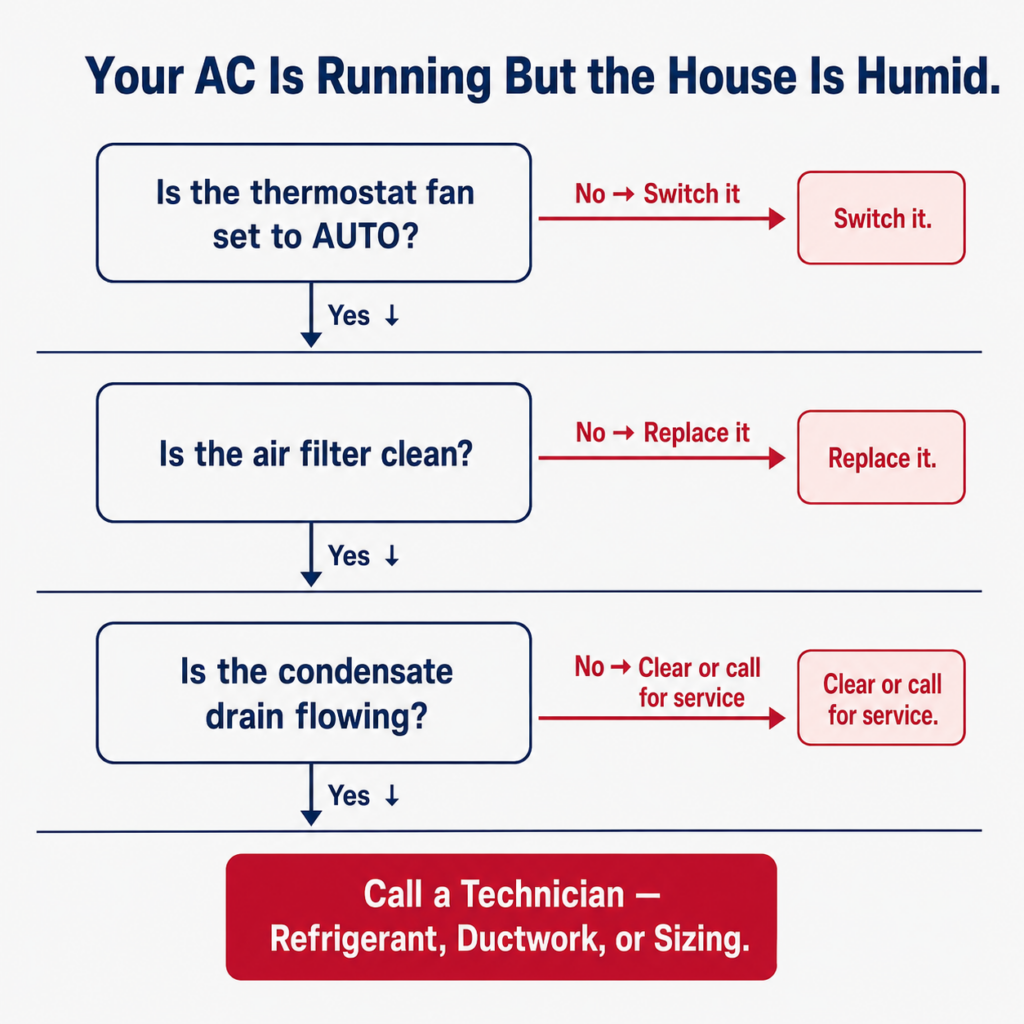
Before anyone talks about new equipment, run through the cheap, common stuff. Two of these cost nothing.
Set the Thermostat Fan to AUTO, Not ON
This is the first thing to check, and it’s free. When the fan is set to ON, the blower keeps running even after the compressor shuts off. The coil is still wet from the last cooling cycle, and that constant airflow re-evaporates the water and blows it right back into your house instead of letting it drain. Building scientist Allison Bailes of Energy Vanguard has documented how the fan-ON setting raises indoor humidity for exactly this reason. Switch it to AUTO so the coil can drain between cycles.
Check Your Air Filter
A dirty filter chokes airflow across the evaporator coil. With too little air moving across it, the coil gets too cold and the condensation on it freezes into ice. A technical case study in ACHR News documented a clogged filter dropping a coil to 26°F and freezing it solid. Once the coil ices over, it stops both cooling and dehumidifying. Check your filter monthly and replace it every one to three months. While you’re at it, make sure supply and return vents aren’t blocked by furniture, rugs, or drapes.
Look at the Condensate Drain
In Houston, the primary AC drain line is usually routed to a bathroom sink, and over time it clogs with algae.
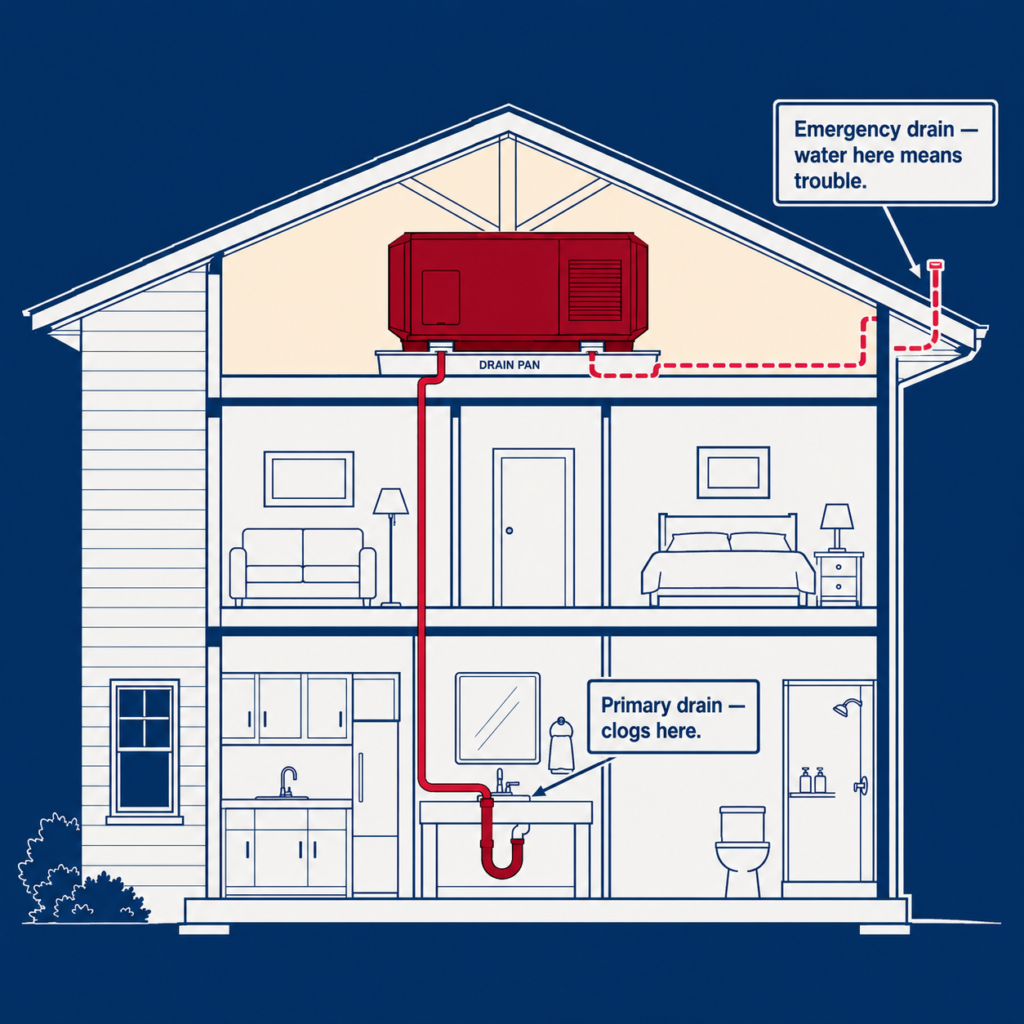
A backed-up line leaves standing water sitting in the drain pan, which keeps the area around the coil wet and can trip the float switch that shuts the system off. Spotting a dripping or backed-up line, or water around the indoor unit, is something you can do yourself. Clearing a deep clog or fixing a drain that was never terminated correctly is a job for a technician. This is one of the things our team catches on a routine AC maintenance visit before it becomes a water-damage problem.
When You Need a Technician
If the simple checks come up clean and the house is still humid, the next causes need a licensed tech with gauges and tools.
Low Refrigerant Charge and a Frozen Coil
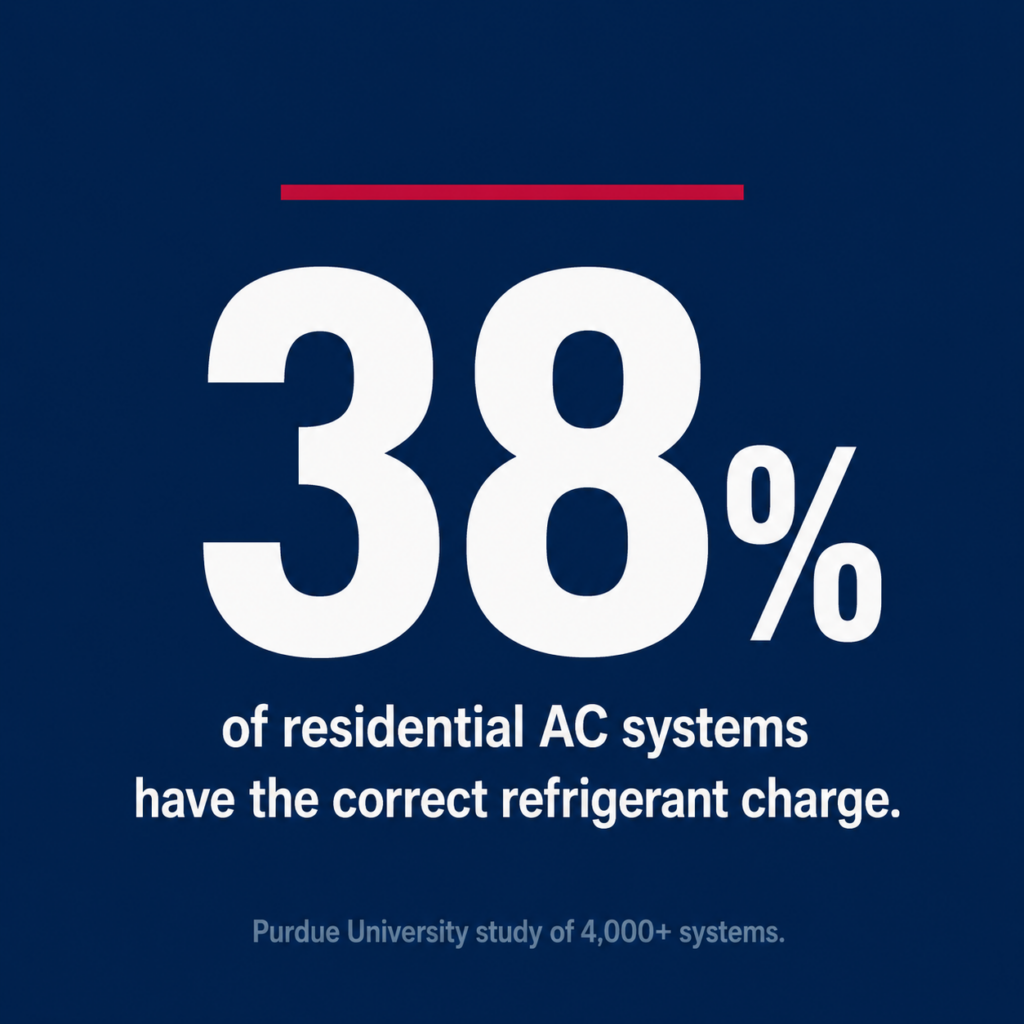
A system that’s low on refrigerant runs the coil too cold, so it ices over and quits removing moisture. This is more common than most homeowners realize. A Purdue University study found that across more than 4,000 residential systems, only 38 percent had the correct refrigerant charge, and a 15 percent undercharge was common. Handling refrigerant requires EPA certification, so this one belongs to a professional. If your coil keeps freezing up, that’s a sign to schedule an AC repair diagnosis.
Leaky or Disconnected Ductwork
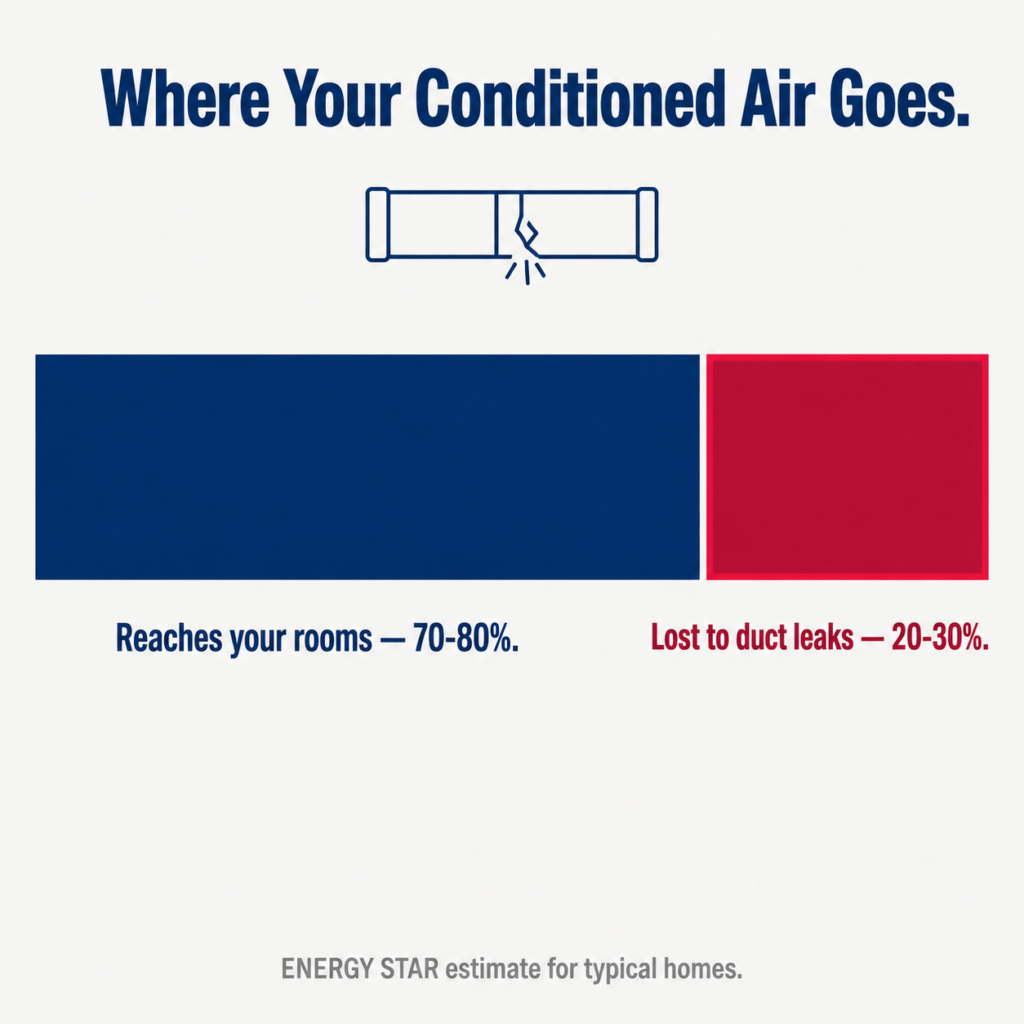
In most Houston homes, the ductwork runs through a hot, humid attic. When there’s a leak or a loose connection on the return side, the system pulls that steamy attic air straight into your home and overwhelms its ability to dehumidify. The EPA estimates that a typical duct system loses 20 to 30 percent of its air to leaks and poor connections. The right fix is having a technician inspect the ducts and repair the connections, not a generic add-on service.
The Cause We Find Most Often: An Oversized System
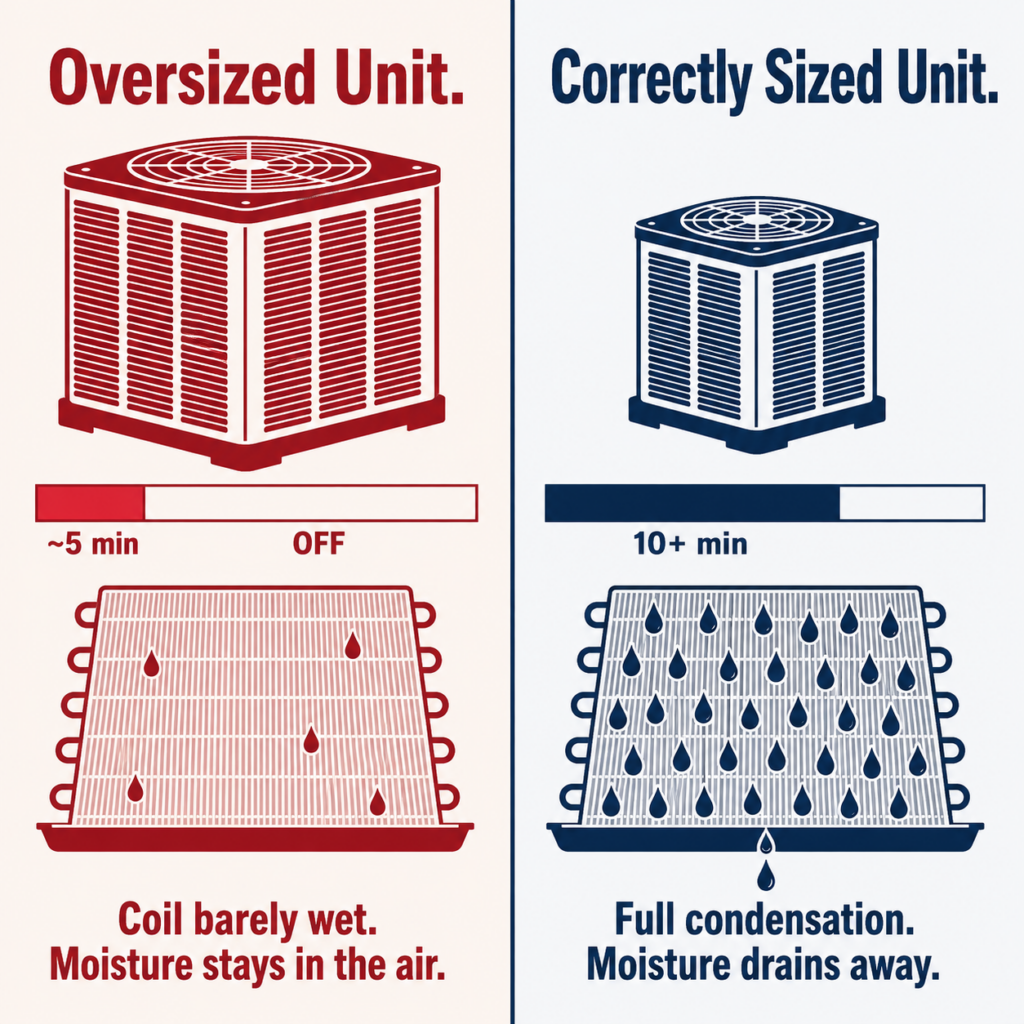
Here’s the one that surprises people. The single most common reason a Houston house stays humid with the AC running is that the air conditioner is too big for the space.
It sounds backward, but a bigger unit makes humidity worse. An oversized system blasts the house to temperature in a few minutes, satisfies the thermostat, and shuts off, a pattern called short cycling. It never runs long enough for moisture to condense on the coil and drain away. ENERGY STAR’s right-sizing guidance explains that oversized units short cycle and don’t remove humidity effectively, which promotes bacterial and surface growth indoors. The same guidance notes that an AC reaches peak efficiency only after running about 10 minutes, so the longer steady runtime of a correctly sized unit does the dehumidification an oversized one skips.
We see this constantly in the field. On one job in a recently purchased home, we found a 4-ton system installed in a space that only needed about 2 tons. The unit cooled so fast it never dried the air, and the chronic humidity upstairs had created the conditions for bacterial growth.
This does not mean your equipment failed. The equipment usually works fine. The problem is that the wrong size was installed, often by a previous contractor who sized by square footage instead of running the numbers. The honest fix is a correctly sized system, specified with an ACCA Manual J load calculation, which is the national standard for sizing residential HVAC equipment. If you’re weighing your options, our repair or replace framework lays out when each one makes sense, and we walk through right-sizing on our HVAC system replacement page. Replacing for the right reason is different from replacing at the first sign of trouble.
Is the Condensation on My Unit Actually a Problem?
Not always. On systems with zone control, cool airflow against the hot attic can leave condensation on the outside casing of the indoor unit. It looks alarming, but it’s surface moisture on the exterior, and the inside of the system is clean.
We get called for second opinions on this regularly. Another company will point at surface growth on the casing and recommend replacing the entire system. When we open the unit, inspect the coil and the blower, and look inside the ductwork, the interior is clean. Just because a system looks dirty on the outside does not mean the inside is contaminated. A real inspection means opening it up and looking.
The same logic applies to surface growth around bathroom vents. We’ve traced that back to a missing flapper valve letting humid outside air mix with the cool conditioned air inside, where warm moist air meeting cool air leaves moisture on the surface. The remedy is fixing the airflow problem. There’s no need to tear out a working system. If your home has ongoing humidity and air quality concerns, our indoor air quality team can pin down the source, and zoning systems are one tool we use to balance airflow in homes that run hot and cold in different areas.
Do I Need a Whole-Home Dehumidifier?
Sometimes, but only after the rest of the system has been checked. A whole-home dehumidifier works alongside a healthy AC. It doesn’t make up for one that hasn’t been diagnosed. Adding it before you fix the underlying cause just masks the problem and adds an appliance you have to run and maintain.
Once the system has been verified as correctly sized, charged, and operating, a dehumidifier can be the right call. ENERGY STAR recommends them for well-sealed homes with central air that still see humidity above 55 percent consistently throughout the house. And the Department of Energy is honest that in extremely humid climates, even a correctly sized AC can struggle with moisture. Houston qualifies. So in some homes, a supplemental dehumidifier really is the answer. Just get the AC diagnosed first.
Quick Answers to Common Humidity Questions

Will a bigger air conditioner fix my humidity problem?
No. A bigger unit usually makes humidity worse. It cools the house faster and shuts off sooner, which means less runtime for moisture removal. Correct sizing, not more tonnage, is what keeps a Houston home dry.
Should I lower my thermostat to reduce humidity?
No. Lowering the thermostat doesn’t pull moisture out of the air. It can leave you cold and clammy while the bill climbs. The fix is restoring the system’s ability to dehumidify.
Why is my newly purchased home so humid even with the AC running?
Recently purchased homes often come with an oversized or poorly installed system inherited from the builder or a previous owner. You didn’t do anything wrong. A technician can check the sizing, the duct connections, and the charge to find what’s keeping the air damp.
Get an Honest Diagnosis
If your Houston home still feels sticky no matter where you set the thermostat, the fastest way to fix it is to find out which of these causes is actually at work. At Spring Branch AC, our NATE-certified technicians diagnose the real problem before recommending any equipment, the same repair-first approach we’ve brought to Greater Houston homes since 1956. Reach out to schedule a free estimate and we’ll have you back to comfort.