


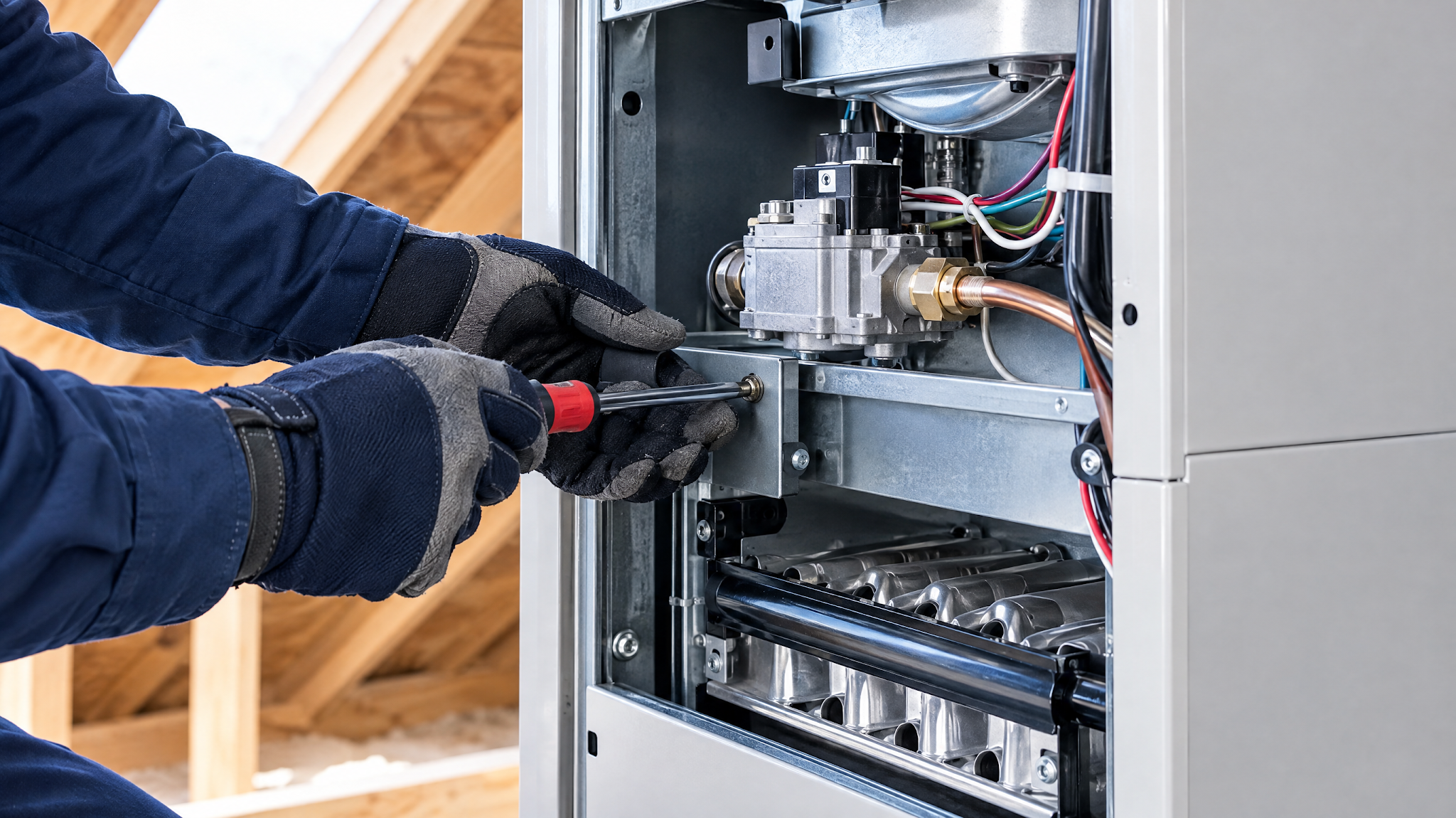
Nationally, a new gas furnace costs about $3,800 to $10,000 installed, according to NerdWallet. Your furnace installation cost in Houston, TX depends mostly on how efficient the new furnace is, what size furnace your house needs, and whether the air conditioner is being replaced at the same time. A free estimate from our technicians gives you the exact price for your home.
Spring Branch AC is a family-owned company that has been serving Houston since 1956. We’re an authorized Amana factory dealer. When a furnace has a problem, we look at repairing it first and recommend a new one only when that makes more sense for you.
What does furnace installation cost in Houston, TX?
Furnace installation cost in Houston comes down to two parts: the furnace itself and the work to put it in. A natural gas furnace alone runs $800 to $2,800, according to This Old House. The rest is labor, removal of the old furnace, any vent pipe changes and the permit.
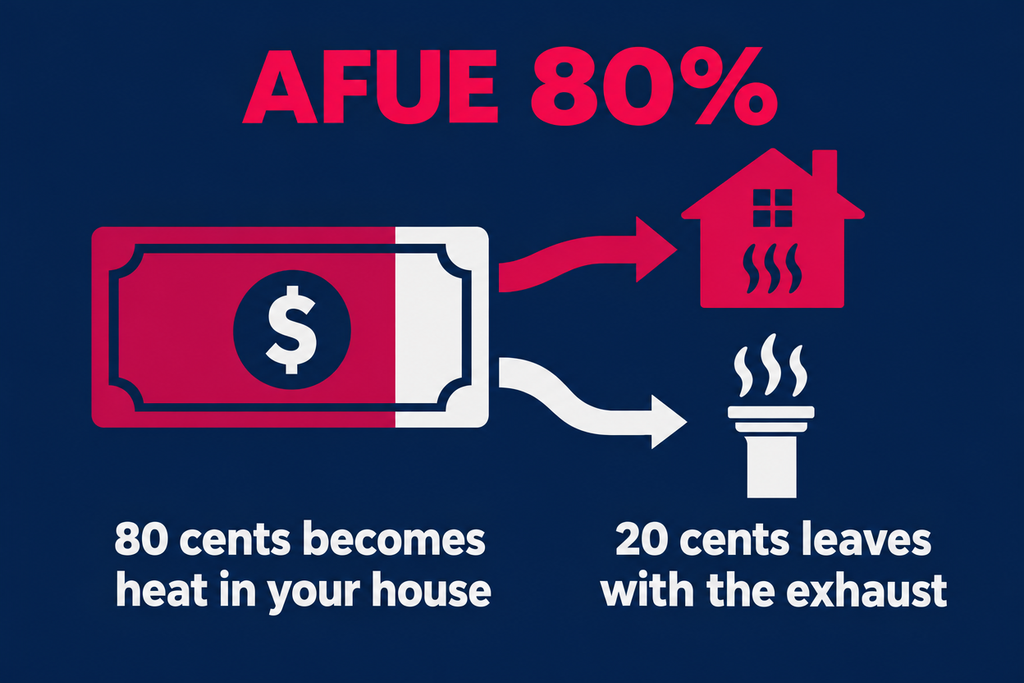
A more efficient furnace costs more to buy. Efficiency is measured as AFUE: the share of every gas dollar that becomes heat in your house. An 80% furnace turns 80 cents of every gas dollar into heat. Here’s what the furnace alone costs at each level, from HomeAdvisor:
| Efficiency (AFUE) | Furnace cost, equipment only |
|---|---|
| 80% to 89% | $500 to $1,500 |
| 90% to 95% | $1,000 to $3,000 |
| 96% and up | $2,000 to $6,000 |
Labor comes on top of those prices. Installers charge about $75 to $100 an hour, and a standard installation takes 4 to 8 hours, according to NerdWallet. By our math, that’s roughly $300 to $800 in labor. Installing a high-efficiency furnace, rated 90% or higher, typically costs about $6,000 in total and can reach $10,000, by Fixr’s estimate.
The size of furnace your house needs moves the price too, and larger homes generally need larger furnaces. Nationally, HomeAdvisor puts installation at about $2,400 to $4,000 for a 2,000-square-foot home and $3,600 to $6,000 for a 3,000-square-foot home.
Quotes can differ by thousands, usually because they don’t cover the same work. A complete quote should spell out:
- The furnace’s model, size and AFUE rating.
- Labor and removal of the old furnace.
- Any vent pipe changes, and a drain line if the furnace is rated 90% or higher.
- How the size was chosen. It should be calculated for your house, not copied from the old furnace.
- The permit. Inside City of Houston limits, the permit fee is 2% of the job cost plus $47, plus a $33.56 admin fee. Suburbs and county areas have their own rules. Your contractor handles the permit either way.
What if you’re replacing the AC and furnace together?
Replacing the AC too adds the outdoor unit and the indoor coil, the part that cools the air, which sits on top of or next to the furnace.
Here are our full system replacement prices for Amana systems. Your technician will confirm what’s included for your home. A ton is a measure of cooling capacity, not weight. SEER is the system’s cooling efficiency rating.
| System size | 16 SEER single speed | Up to 16 SEER two speed | Elite 20 SEER variable speed |
|---|---|---|---|
| 2 ton | $7,669 | $9,358 | $10,670 |
| 3 ton | $7,960 | $9,578 | $11,961 |
| 4 ton | $9,667 | $10,646 | $12,968 |
| 5 ton | $9,878 | $10,942 | $13,671 |
If you’re weighing a new air conditioner along with the furnace, our guide to new HVAC system cost in Houston covers the cooling side.
Should I repair or replace my furnace?
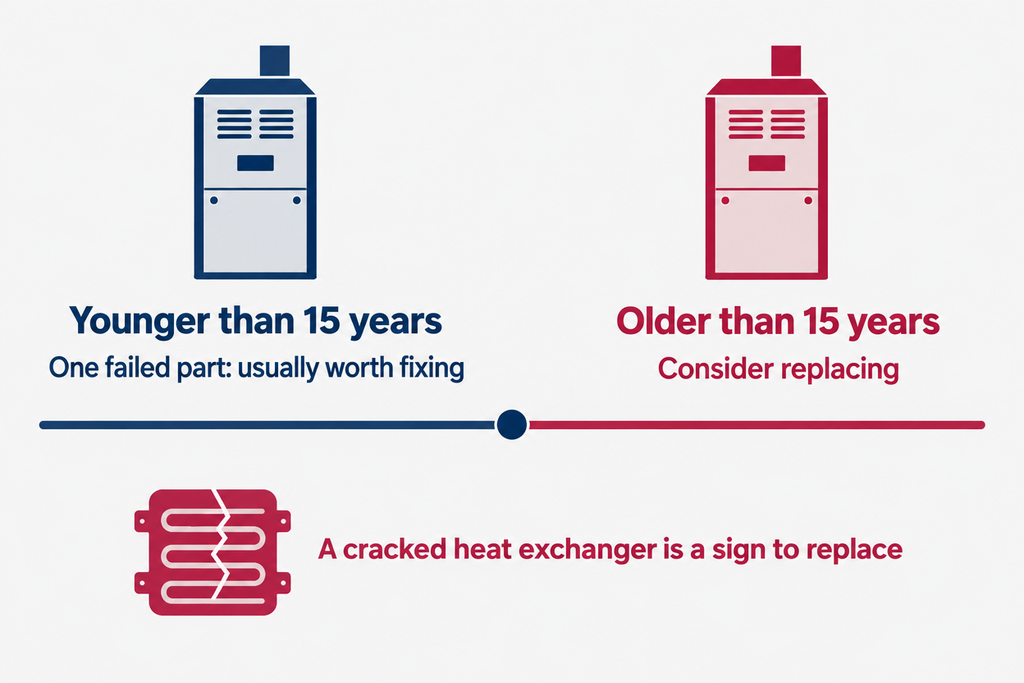
A furnace younger than 15 years with one failed part is usually worth fixing. A new furnace usually makes more sense than another repair when:
- The furnace is more than 15 years old. ENERGY STAR suggests repairing a furnace younger than that and considering replacement after.
- Repairs keep coming back and your gas bills keep climbing.
- The heat exchanger is cracked. The heat exchanger keeps the burner’s exhaust, which contains carbon monoxide, out of the air that blows into your rooms. A crack can let carbon monoxide into that air. This Old House lists a cracked heat exchanger as a sign to replace.
- The repair would cost a large share of what a new furnace costs.
Real technicians work here, not professional salespeople. Ours aren’t paid on commission, so they have no reason to push a new furnace. They’ll give you an honest assessment of both options. The decision is yours. If you’d like a technician to check your current furnace, start with our heater repair service.
What AFUE rating do I need in Houston?
The federal minimum for a gas furnace is 80% AFUE. For many Houston homes, 80% is also the sensible choice. Our heat doesn’t run much, so a more efficient furnace doesn’t save much gas. Older furnaces often run at 56% to 70%, according to the Department of Energy, so even an 80% furnace burns noticeably less gas. The Amana gas furnaces we install range from 80% AFUE into the high 90s.
A federal rule would raise the minimum to 95% for furnaces made from December 2028. As of June 2026, that rule was back in court for reconsideration. The Department of Energy was also considering a delay to 2030, with no final decision announced. An 80% furnace can still be bought and installed today. The 95% rule would never require you to replace a furnace you already have.
Is a high-efficiency furnace worth it in Houston?
A high-efficiency furnace usually takes a long time to pay for itself in Houston. Houston runs its heat far less than its air conditioning: NOAA weather records show the city needs less than half as much heating as cooling in a typical year. With so little heating, a more efficient furnace has little gas to save.
A Texas home that heats with gas spends about $464 a year on gas for heat, based on EIA gas use and the 2025 Texas gas price. Here’s what each change would save (our math):
| Old furnace to new furnace | Yearly savings |
|---|---|
| 65% to 80% | about $87 |
| 65% to 96% | about $150 |
| 80% to 90% | about $52 |
A 90% furnace can cost about $1,000 more than a similar 80% one, according to Consumer Reports. Going from 80% to 90% saves about $52 a year, so that extra $1,000 takes about 19 years to earn back.
A furnace rated 90% or higher also costs more to install. It pulls so much heat out of its exhaust that water condenses out of it. These furnaces need a PVC vent pipe in place of the metal vent pipe an 80% furnace uses, as ServiceMag explains. The water needs a drain line that slopes down to a drain or to a small pump, according to a Department of Energy guide.
How is a furnace sized?
The right furnace size comes from a load calculation, not from the size of the old furnace or the square footage of the house. The standard method is ACCA’s Manual J, which works out how much heat your house loses in cold weather from its windows, walls and roof, air leaks and ductwork.
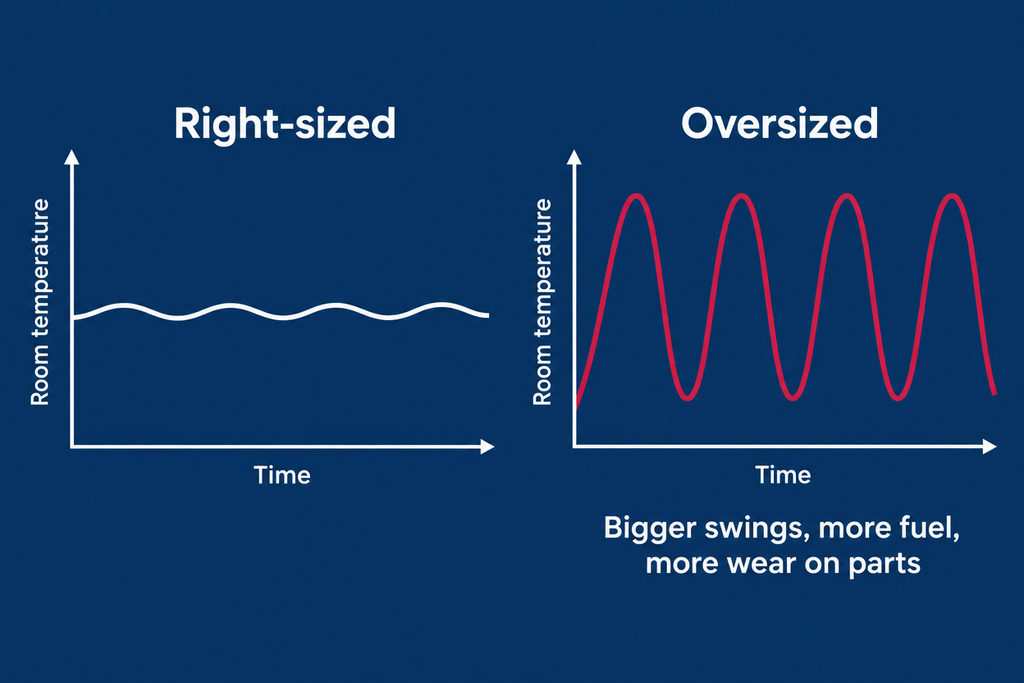
An oversized furnace will warm the house faster but uses more fuel and causes greater temperature swings throughout the home. A furnace that’s too large also turns on and off more often, which wears out its parts faster, as Consumer Reports notes. Our technicians run a load calculation for every home rather than matching the old furnace.
Does the indoor coil need to be replaced too?
If you’re replacing the air conditioner along with the furnace, the indoor coil should be replaced along with the outdoor unit. The outdoor unit and the indoor coil are built to work as a pair, according to AHRI, the industry group that certifies equipment ratings.
We advise against replacing only the outdoor unit and keeping the old indoor coil. That can cut the system’s efficiency by up to 15%. It also voids most manufacturers’ warranties. If only the furnace is being replaced, your technician can tell you whether your existing coil stays.

What happens during a furnace installation?
A standard installation takes 4 to 8 hours, so most are done in one day. A correct installation includes these steps:
- Load calculation and estimate. Our technicians run a load calculation and give you a free estimate.
- Permit. The contractor gets the permit. Inside City of Houston limits, only a contractor licensed by the state and registered with the city can get one. Our Texas license is TACLB49330E.
- Removal. The old furnace is disconnected and hauled off.
- New furnace. The new furnace goes where the old one was, often in the attic.
- Connections. The installer connects the gas line, vent pipe and electrical, plus the drain line on a 90% or higher furnace.
- Start-up and safety checks. The installer fires it up and checks that it runs and vents correctly.
- City inspection. Inside City of Houston limits, a city inspection of the work is required.
You’ll find more on our heater installation page.
Can I finance a new furnace?
You can finance a new furnace through Synchrony, including 0% interest for 18 months, subject to credit approval. Our financing page has the details.
If your furnace is acting up or getting older, call us at (713) 937-6739, 24/7. One of our technicians will look at it, tell you whether a repair or a new furnace makes more sense, and give you a free estimate.