

By Chris Crawford, Owner of Spring Branch Air Conditioning & Heating
Furnace maintenance is a technician cleaning your gas furnace and testing the safety switches in it before you count on it for the winter. A gas furnace burns a lot of fuel to heat your house. Its safety switches shut the gas off when something goes wrong, and they’re what keep it safe to run in your attic. In Houston, the time for furnace maintenance is in the fall, before the first cool night.
Spring Branch Air Conditioning & Heating has been a family-owned Houston company since 1956. Every fall, we harp on getting your heating system checked.
What does furnace maintenance include?
Furnace maintenance includes cleaning the parts that light and burn the gas, testing the safety switches and checking that exhaust gases leave the house the way they should. Our technicians:
- Test for carbon monoxide leaks
- Clean the burner assembly
- Clean the ignition assembly
- Clean the blower motor
- Inspect the filtration system
- Adjust the blower components
- Test and adjust the safety controls
- Tighten the electrical connections
- Check the flue draft, which is how well the vent pipe pulls gases out of the house
- Check combustion, which is how well the burners are burning the gas
- Inspect the vent piping that carries the exhaust outside
- Inspect the humidification system, if you have one
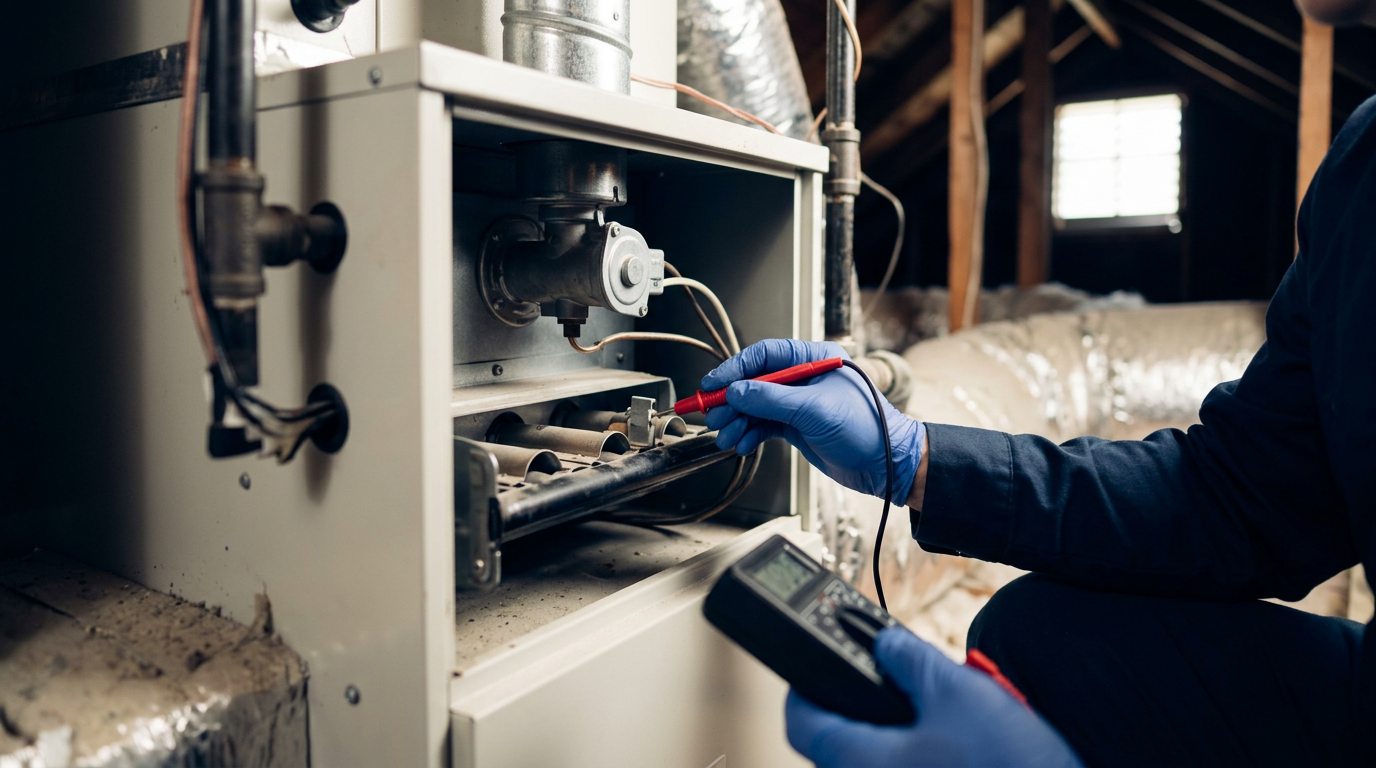
The most important part of furnace maintenance is testing the safety switches. A gas furnace starts up one step at a time. The furnace’s control board, a small circuit board inside the cabinet, runs each step. At several of those steps, a safety switch has to tell the control board that everything is right before the board moves on to the next one.
What happens when you turn the heat on?
When you turn the heat on, the furnace starts its draft inducer motor, checks that the exhaust is venting, lights the gas and then confirms there’s a flame.
- The thermostat calls for heat, and the control board starts the draft inducer motor.
- A pressure switch confirms the exhaust is venting.
- The igniter heats up.
- The gas valve opens, and the igniter lights the burners.
- The flame sensor confirms there’s a flame.
- After a short delay, the main blower comes on and sends warm air through your ducts.

I walk through each of these steps on a real furnace in my video.
You can also watch it on YouTube: Get Your Heater Checked!
The draft inducer motor and pressure switch
The first thing the furnace does is turn on a small fan called the draft inducer motor. Burning natural gas or propane makes exhaust gases you don’t want in your house. The inducer pulls those gases out of the furnace and pushes them through a vent pipe to the outside of the house.
A pressure switch next to the inducer tells the control board that the inducer is running and the exhaust has somewhere to go. If the switch doesn’t sense the inducer pulling exhaust out, it never gives the control board that signal, and the furnace won’t light. Our furnace maintenance includes testing the safety switches and inspecting the vent pipe.
The igniter and gas valve
Once the pressure switch gives the go-ahead, the igniter heats up. On most modern furnaces this is a hot surface igniter: a small element that gets hot enough to light the gas. On the furnace in my video it’s the little white piece hanging down in the back. When the igniter is hot, the gas valve opens and gas flows into the burners, where the igniter lights it.
Goodman, a furnace manufacturer, warns in its service manual that touching the igniter with bare fingers, rough handling or vibration can make it fail early.
The flame sensor
The flame sensor confirms that the burners actually lit. On the furnace in my video, which has three burners, the gas lights across all three, and the third burner puts its flame on the sensor. If the sensor doesn’t detect a flame, the control board shuts the gas valve and tries again. That way, gas doesn’t keep flowing when nothing is burning it. If the furnace keeps failing to light, the control board locks out, which means the furnace stops trying for a while and the house gets no heat.
A dirty flame sensor is one cause of a furnace that lights and then shuts off a few seconds later.
What do the other safety switches on a furnace do?
The other safety switches shut the furnace down if something goes wrong while it’s running.
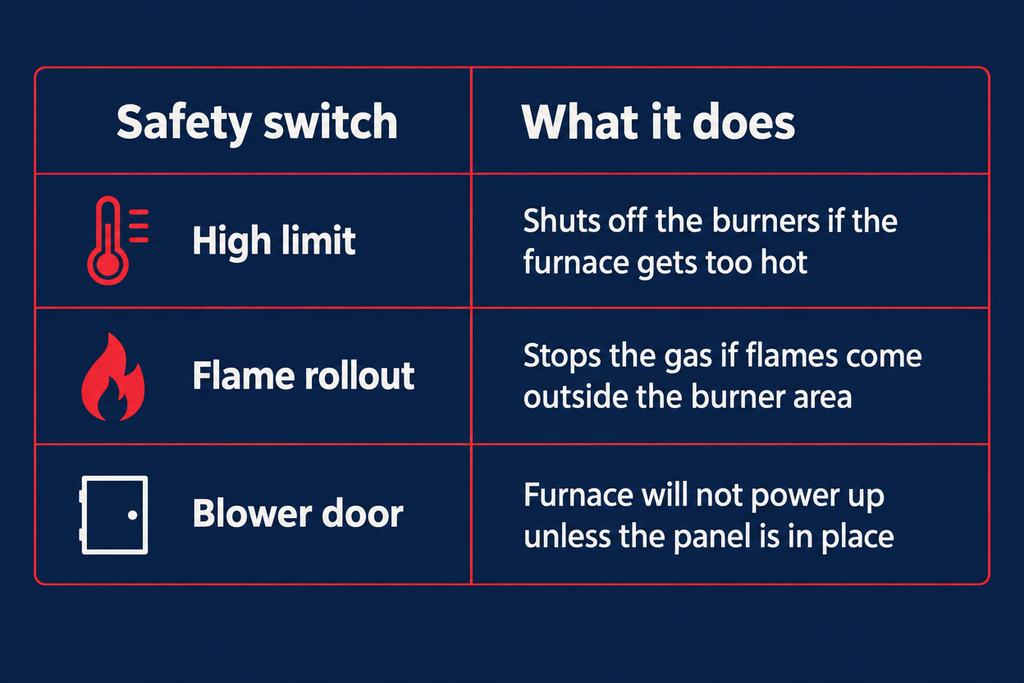
- High limit switch. This is the overheat switch. It tells the system if the inside of the furnace cabinet is getting too hot and shuts off the burners. It resets on its own once things cool down.
- Flame rollout switches. These shut the furnace down and stop the gas if flames or heat come outside the burner area where they belong. Most need someone to press a reset button before the furnace will run again. Don’t reset one yourself. A rollout switch trips because something is wrong. Lennox, a furnace manufacturer, lists causes like a blocked vent, dirty burners or a problem with the gas pressure.
- Blower door switch. There’s one more safety switch on the blower section, under the blower door (the removable panel over the blower). The furnace won’t power up unless the door is in place and the switch is engaged. If your furnace won’t start after someone took that panel off, check that it’s pushed all the way back on.
Why does a furnace need a check if it worked fine last year?
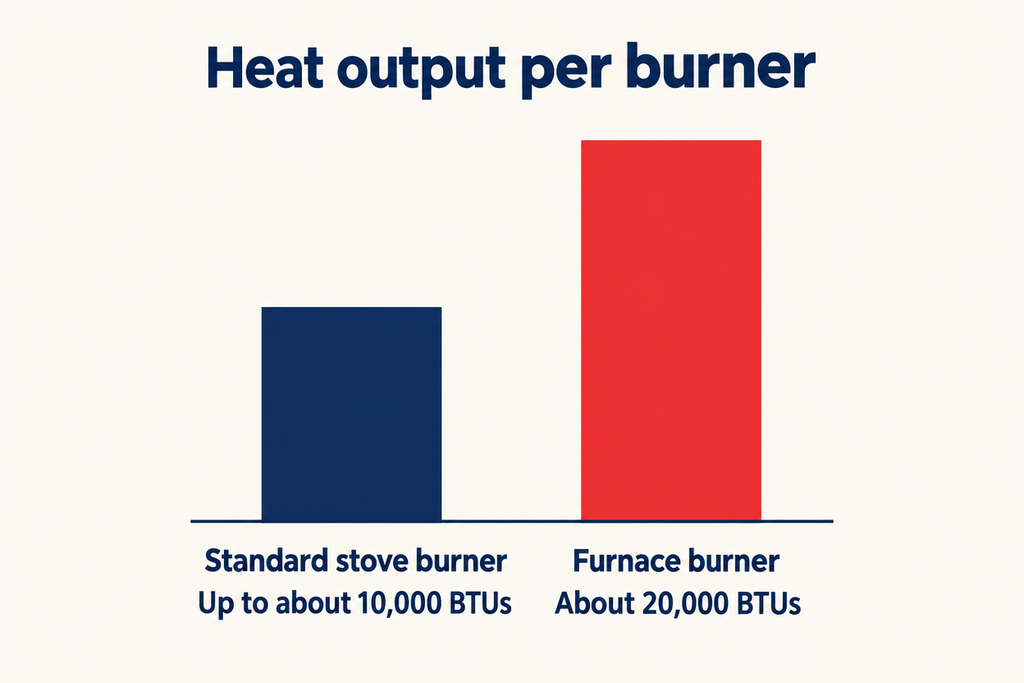
A furnace needs maintenance every year because it burns a lot of gas and runs when nobody is watching it. The furnace in my video is a 60,000 BTU unit with three burners, so each burner puts out about 20,000 BTUs. A standard burner on a home gas stove is rated at up to about 10,000 BTUs, according to Whirlpool. That means each furnace burner puts out at least twice the heat, in BTUs, of a standard stove burner.
Nobody would leave the house with the gas stove running. But you’re fine leaving the house with the furnace running, and that’s because it’s built with all these safety switches.
The exhaust the inducer pushes outside can contain carbon monoxide, which is why the venting checks matter. The U.S. Consumer Product Safety Commission says fuel-burning heating systems, including furnaces, can produce carbon monoxide. It recommends you “have a professional inspect all fuel-burning heating systems, including furnaces, boilers, fireplaces, wood stoves, water heaters, chimneys, flues and vents each year” (CPSC, January 2026).
Do you need furnace maintenance in Houston’s mild winters?
Yes, you need furnace maintenance in Houston, because your furnace still runs on our cool nights. I know it doesn’t get super cold here. But it does get cool enough at night that you’ll want a little heat in the house. The National Weather Service puts Houston’s normal low at about 51°F in November and about 44°F in January.
In Houston, your furnace has likely sat unused in the attic since late winter. The first cool night of the fall is when it fires up again, so it’s the night you’re counting on the safety switches to work. Have it serviced once a year, in the fall, before that first cool night. ENERGY STAR recommends a professional check of your heating system every fall and your cooling system every spring. We follow the same schedule: furnace maintenance in the fall and air conditioning maintenance in the spring.
What furnace maintenance can you do yourself?
You can do a few simple things yourself, and none of them involve opening up the burner compartment:
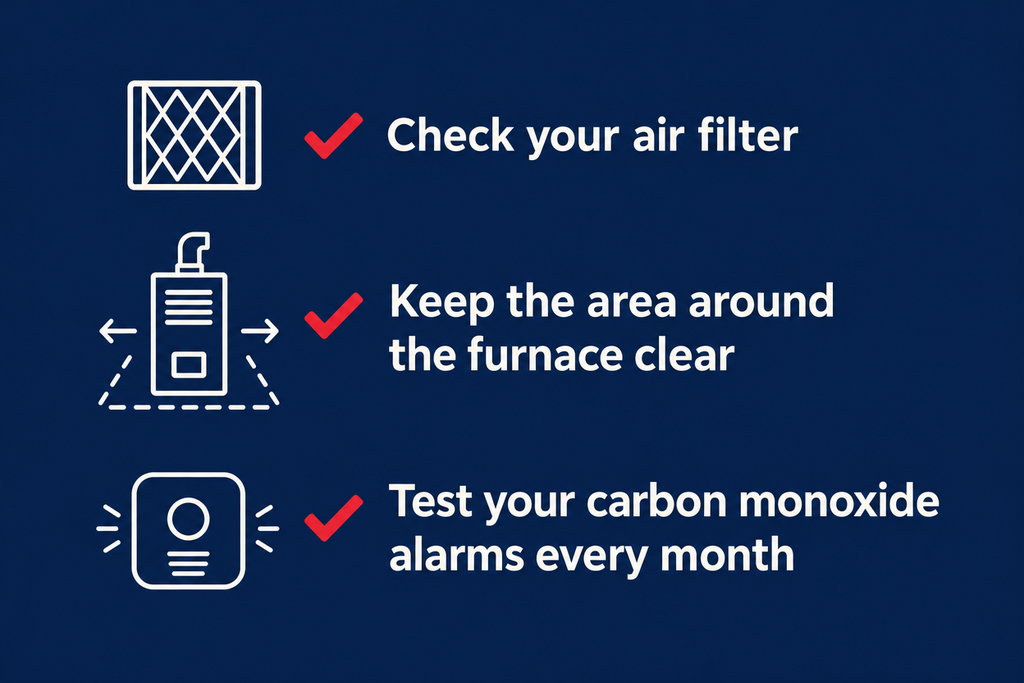
- Check your air filter. ENERGY STAR recommends inspecting it once a month and cleaning or changing it as needed. How often yours needs changing depends on the type of filter, pets and the size of your system. If you’re not sure, call us and we’ll tell you what makes sense for your house.
- Keep the area around the furnace clear. Don’t store boxes or other things against the furnace in the attic. Keep the return air grille clear, too. That’s the large vent inside the house where air is pulled back into the system.
- Test your carbon monoxide alarms every month. The CPSC recommends CO alarms on every level of your home and outside sleeping areas.
Leave the igniter, flame sensor and safety switches to a technician. If your furnace won’t heat at all, our gas furnace troubleshooting guide walks through the checks to try before you call us.
How much does furnace maintenance cost with Spring Branch AC?
Furnace maintenance with Spring Branch AC is part of our service agreement:
- Service agreement: $169 a year for two tune-ups, one for your air conditioning in the spring and one for your heating in the fall.
- New Clients Only: a $99 maintenance agreement coupon, good through October 31, 2027. Print the coupon and have it ready when the technician arrives.
You can read more about furnace maintenance on our heating maintenance page.
If the technician finds a problem, we’ll discuss your repair options with you. You’ll find more on our heating repair page.
Schedule your furnace maintenance
If you’d like us to check your furnace, give us a shout at (713) 937-6739 or reach us anytime at springbranchac.com. You can find more of my videos on our YouTube channel.
Video Transcript
Hey everybody, Chris Crawford at Spring Branch Air Conditioning & Heating.
I wanted to go over today what your gas furnace in your attic space looks like and why we harp so much about getting this system checked out before the fall and winter season start. This thing is a gas-breathing, fire-emitting machine, and it can really cause some serious damage to your home if we don’t get it looked at.
So, let’s go over the typical operation. When the thermostat tells this circuit board that, hey, I need warm air in the house, the first thing that it’s going to do is turn on this motor here. This is your draft inducer motor. So, when this motor comes on, it’s going to try and pull any of the bad gases that get emitted from burning natural gas or propane. It’s going to get it out of the house. It’s going to take it and create a negative pressure and shove it through a big pipe that comes up and takes it to the outside of the house. When this unit is running, this little safety switch tells the circuit board that yes, it’s up and running and we’re good to go to turn everything else on.
The next thing that happens is that you’ve got an igniter assembly all the way back here in the back. You can see the little white thing hanging down there. That’s the igniter. That’s going to ignite the natural gas that’s coming through here. So, it’s going to get super hot and then your gas valve is going to open and all that natural gas is going to come into the three burner assemblies. And that igniter back there is what’s going to light the gas.
And then you have another switch back over here that’s going to tell the unit that the burners are actually lit. So, it’s going to light one, two, three burners. And this third burner is going to put the flame on that sensor back there to tell it that the unit is actually up and running.
Now, in comparison, this unit has three burners on it. 20,000, 40,000, 60,000. This is a 60,000 BTU gas furnace. In comparison, your typical stove top in your home, each individual burner, usually the larger ones, are going to run between 7 and 10,000 BTUs. So, as you can imagine, one of these burners is double what your large burner is on your stove top, just to give you some kind of an idea as to how much power that we’re dealing with.
Now we went over this safety switch already that tells the circuit board that the burners are ignited. This is an overheat switch, which is going to tell the system if the cabinet on the inside is getting too hot. These two switches are rollout switches so that if we get too hot on the outside of this burner assembly, it’ll turn the unit off. So, there’s a whole host of safety switches on this unit that keep this thing safe to run in your home even when you’re not there.
So, I mean, nobody would leave the house with their gas stove top running, right? But you’re okay with leaving and letting your heating system run when you’re not at home simply because it’s designed to be super duper safe. There’s even another safety switch down here on the blower assembly itself.
But listen, again, 60,000 BTUs versus like 10,000 BTUs on a gas stove top. You really need to get this system checked out. The last time this thing ran was probably February, and now we’re going to roll into October, November. It’s going to get a little bit cool at night, and you’re going to want just a little bit of heat in the house. I know we live in Houston. It doesn’t get super duper cold outside, but it does get cool enough that at night, you’re probably going to want to turn the heat on and get a little bit of heat in the house. Get this system checked out and make sure that all these safety components are operating properly before you do. We don’t want there to be a big problem in the home.
Listen guys, give us a shout anytime if we can help you out. (713) 937-6739 is the best telephone number. You can find us online at any time, springbranchac.com. Please schedule your heating system check soon. Don’t wait till it gets cold outside. Thanks, guys.