


Veteran-owned and operated badge

How Much Does a Water Filtration System Cost in Houston, TX?

How Much Does a Water Filtration System Cost in Houston, TX

By Chris Crawford, Owner of Spring Branch AC

A whole-home water softener, the type of water filtration system that handles hard water, costs $350 to $1,500 installed in Houston, according to Angi’s Houston cost data. The softener is the system that stops the white buildup on shower glass and faucets. If you also want chemicals like chlorine filtered out of your water, you need a filter too. A combined filter and softener costs $2,500 to $5,000 installed.

At Spring Branch AC, we’ve been working on Houston-area homes since 1956. Whole-home softening and filtration are part of the plumbing work we do.

How much does a water filtration system cost in Houston?

Angi’s Houston data puts the average whole-home water treatment project at $2,268 installed, with most between $1,382 and $3,225. That overall range mixes every type of system, so the number that applies to you is the one for the system you need:

SystemHouston installed cost 
Water softener$350 to $1,500
Whole-house filter$1,000 to $5,500
Combined filter and softener$2,500 to $5,000

National figures run higher for softeners. HomeGuide puts an installed softener at $1,200 to $3,800 nationwide.

If you only want cleaner drinking water at the kitchen sink, an under-sink reverse osmosis system costs $300 to $950, based on HomeGuide’s national figures.

Water softener vs. water filter: which one do you need?

A water softener fixes hard water. A water filter fixes the taste and smell of treated city water. You may need one or both, depending on which problem you have.

Water softenerWhole-house filter 
RemovesMinerals, mostly calciumChemicals the city adds to treat the water, such as chlorine
FixesWhite buildup on shower glass, spots on dishes, scale on faucetsChemical taste or smell from the tap
Won’t fixTaste or smellHard water buildup

The EPA’s WaterSense softener guide notes that softeners “do not typically treat for other water contaminants,” which means a softener alone won’t take out chemicals like chlorine. Match the system to your problem:

  • Buildup on glass, dishes and faucets: a water softener.
  • Tap water that tastes or smells of chemicals: a whole-house filter.
  • Both problems: a combined system that does filtering and softening in one unit.

Is Houston water hard?

Houston’s water is hard. The City of Houston’s 2025 water quality report lists an average hardness of 135.5 mg/L for the City’s main system. That average falls in the “hard” class on the U.S. Geological Survey’s scale, which runs from soft (0 to 60 mg/L) to very hard (over 180 mg/L). Individual readings in the same report ranged from 43.5 mg/L, which is soft, to 229 mg/L, which is very hard.
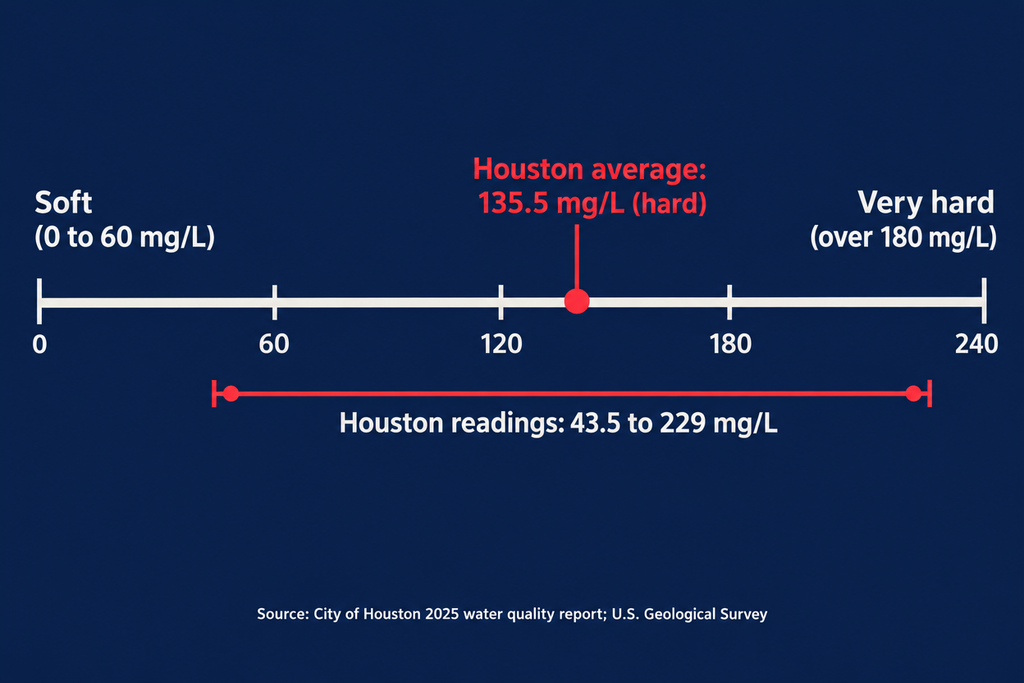
Houston water hardness compared with the USGS hardness scale

Do I need a water test before buying a system?

Most Houston homeowners don’t need a water test before buying a softener, because hard water is close to universal in the Houston area. A test is worth it when you have a specific concern about chemicals in your water. That concern is the reason most people ask us for a test. We offer water analysis for exactly that. A water test typically costs $100 to $300, according to HomeGuide.

What changes the installed price?

The type of system sets most of the price. After that, three things about your house change what you pay:

  • How many people live there. A bigger household uses more water, so it needs a bigger system. For homes with six or more people, Angi’s Houston range for a whole-house system rises to $2,500 to $5,800, compared with $1,000 to $5,500 across all homes.
  • How easy the main water line is to reach. The system goes on the line where water enters the house, so a line that’s hard to get to takes longer to work on. According to Angi, installers in Houston charge $50 to $200 an hour, and a whole-house system takes 4 to 8 hours or more.
  • Whether there’s a drain nearby. A softener uses water to rinse out the minerals it collects, and that rinse water has to go down a drain. If there isn’t a drain close to where the system goes, adding a drain line raises the cost.

When you compare quotes, check that each one names the type of system and says whether it covers the equipment, the installation and the drain work. That way you’re comparing the same job.

What does a water filtration system cost to maintain each year?

Yearly upkeep for a whole-home system usually runs about $300 to $700 for filter cartridges, softener salt and a maintenance visit. The CDC’s advice on home filters is to keep “regularly changing the filters according to the manufacturer’s recommendations.” A softener uses salt to do its job, so the salt has to be topped up. The EPA suggests checking the salt level every 4 to 6 weeks. These yearly costs are national figures from HomeGuide:

ItemYearly costHow often 
Whole-house filter cartridges, changed yourself$150 to $250On the maker’s schedule
Softener salt$50 to $150Check every 4 to 6 weeks
Softener maintenance$100 to $300Once a year

If you’d rather have a technician change your filter cartridges, expect to pay $65 to $180 per visit on top of the cartridges.

What a water softener protects: your water heater

A softener also protects your water heater, because hard water leaves minerals, mostly calcium, at the bottom of the tank. In a gas water heater, the burner sits right under that layer, so the minerals end up between the flame and the water. The heater has to run harder to heat the same water. Over the years, that strain can crack the bottom of the tank. The U.S. Geological Survey notes that this buildup can “reduce the life of equipment, raise the costs of heating the water.”
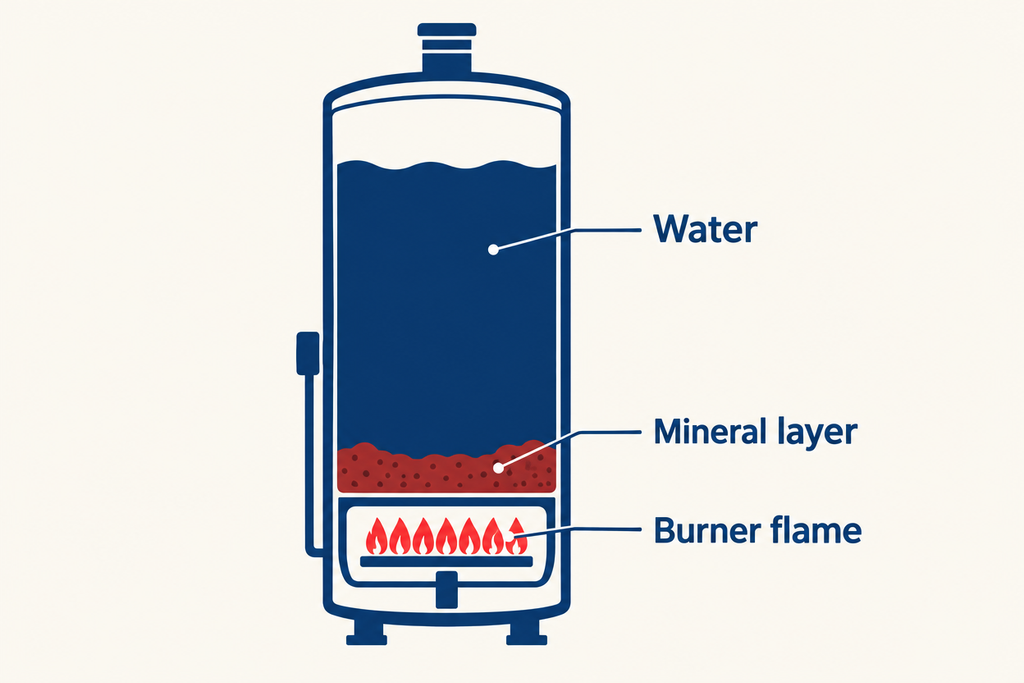
Mineral layer between the burner and the water in a gas water heater

Whether or not you have a softener, we recommend having a tank water heater flushed once a year, or at least every two years. Flushing drains the settled minerals out of the bottom of the tank. If your water heater is already giving you trouble, our technicians handle water heater repair too.

What we install at Spring Branch AC

The system we install is the New Gen Fusion XT. It does whole-home filtration and softening in one unit, so the closest comparison is Angi’s Houston range for a combined system, $2,500 to $5,000. You can see the options we offer on our water filtration systems and water softeners and conditioners pages.

If you’re tired of scrubbing buildup off your shower glass, give us a call at (713) 937-6739 and schedule a free estimate. Real technicians work here, not salespeople, so one of them will look at your setup, tell you what your home actually needs and give you a price for it.

By Chris Crawford, Owner of Spring Branch AC

A whole-home water softener, the type of water filtration system that handles hard water, costs $350 to $1,500 installed in Houston, according to Angi’s Houston cost data. The softener is the system that stops the white buildup on shower glass and faucets. If you also want chemicals like chlorine filtered out of your water, you need a filter too. A combined filter and softener costs $2,500 to $5,000 installed.

At Spring Branch AC, we’ve been working on Houston-area homes since 1956. Whole-home softening and filtration are part of the plumbing work we do.

How much does a water filtration system cost in Houston?

Angi’s Houston data puts the average whole-home water treatment project at $2,268 installed, with most between $1,382 and $3,225. That overall range mixes every type of system, so the number that applies to you is the one for the system you need:

SystemHouston installed cost 
Water softener$350 to $1,500
Whole-house filter$1,000 to $5,500
Combined filter and softener$2,500 to $5,000

National figures run higher for softeners. HomeGuide puts an installed softener at $1,200 to $3,800 nationwide.

If you only want cleaner drinking water at the kitchen sink, an under-sink reverse osmosis system costs $300 to $950, based on HomeGuide’s national figures.

Water softener vs. water filter: which one do you need?

A water softener fixes hard water. A water filter fixes the taste and smell of treated city water. You may need one or both, depending on which problem you have.

Water softenerWhole-house filter 
RemovesMinerals, mostly calciumChemicals the city adds to treat the water, such as chlorine
FixesWhite buildup on shower glass, spots on dishes, scale on faucetsChemical taste or smell from the tap
Won’t fixTaste or smellHard water buildup

The EPA’s WaterSense softener guide notes that softeners “do not typically treat for other water contaminants,” which means a softener alone won’t take out chemicals like chlorine. Match the system to your problem:

  • Buildup on glass, dishes and faucets: a water softener.
  • Tap water that tastes or smells of chemicals: a whole-house filter.
  • Both problems: a combined system that does filtering and softening in one unit.

Is Houston water hard?

Houston’s water is hard. The City of Houston’s 2025 water quality report lists an average hardness of 135.5 mg/L for the City’s main system. That average falls in the “hard” class on the U.S. Geological Survey’s scale, which runs from soft (0 to 60 mg/L) to very hard (over 180 mg/L). Individual readings in the same report ranged from 43.5 mg/L, which is soft, to 229 mg/L, which is very hard.

Houston water hardness compared with the USGS hardness scale

Do I need a water test before buying a system?

Most Houston homeowners don’t need a water test before buying a softener, because hard water is close to universal in the Houston area. A test is worth it when you have a specific concern about chemicals in your water. That concern is the reason most people ask us for a test. We offer water analysis for exactly that. A water test typically costs $100 to $300, according to HomeGuide.

What changes the installed price?

The type of system sets most of the price. After that, three things about your house change what you pay:

  • How many people live there. A bigger household uses more water, so it needs a bigger system. For homes with six or more people, Angi’s Houston range for a whole-house system rises to $2,500 to $5,800, compared with $1,000 to $5,500 across all homes.
  • How easy the main water line is to reach. The system goes on the line where water enters the house, so a line that’s hard to get to takes longer to work on. According to Angi, installers in Houston charge $50 to $200 an hour, and a whole-house system takes 4 to 8 hours or more.
  • Whether there’s a drain nearby. A softener uses water to rinse out the minerals it collects, and that rinse water has to go down a drain. If there isn’t a drain close to where the system goes, adding a drain line raises the cost.

When you compare quotes, check that each one names the type of system and says whether it covers the equipment, the installation and the drain work. That way you’re comparing the same job.

What does a water filtration system cost to maintain each year?

Yearly upkeep for a whole-home system usually runs about $300 to $700 for filter cartridges, softener salt and a maintenance visit. The CDC’s advice on home filters is to keep “regularly changing the filters according to the manufacturer’s recommendations.” A softener uses salt to do its job, so the salt has to be topped up. The EPA suggests checking the salt level every 4 to 6 weeks. These yearly costs are national figures from HomeGuide:

ItemYearly costHow often 
Whole-house filter cartridges, changed yourself$150 to $250On the maker’s schedule
Softener salt$50 to $150Check every 4 to 6 weeks
Softener maintenance$100 to $300Once a year

If you’d rather have a technician change your filter cartridges, expect to pay $65 to $180 per visit on top of the cartridges.

What a water softener protects: your water heater

A softener also protects your water heater, because hard water leaves minerals, mostly calcium, at the bottom of the tank. In a gas water heater, the burner sits right under that layer, so the minerals end up between the flame and the water. The heater has to run harder to heat the same water. Over the years, that strain can crack the bottom of the tank. The U.S. Geological Survey notes that this buildup can “reduce the life of equipment, raise the costs of heating the water.”

Mineral layer between the burner and the water in a gas water heater

Whether or not you have a softener, we recommend having a tank water heater flushed once a year, or at least every two years. Flushing drains the settled minerals out of the bottom of the tank. If your water heater is already giving you trouble, our technicians handle water heater repair too.

What we install at Spring Branch AC

The system we install is the New Gen Fusion XT. It does whole-home filtration and softening in one unit, so the closest comparison is Angi’s Houston range for a combined system, $2,500 to $5,000. You can see the options we offer on our water filtration systems and water softeners and conditioners pages.

If you’re tired of scrubbing buildup off your shower glass, give us a call at (713) 937-6739 and schedule a free estimate. Real technicians work here, not salespeople, so one of them will look at your setup, tell you what your home actually needs and give you a price for it.

Previous Post
Next Post

Contact Spring Branch AC

Free estimates available. Licensed, insured, and ready to help.

Scroll to Top