

By Chris Crawford, Owner of Spring Branch Air Conditioning & Heating
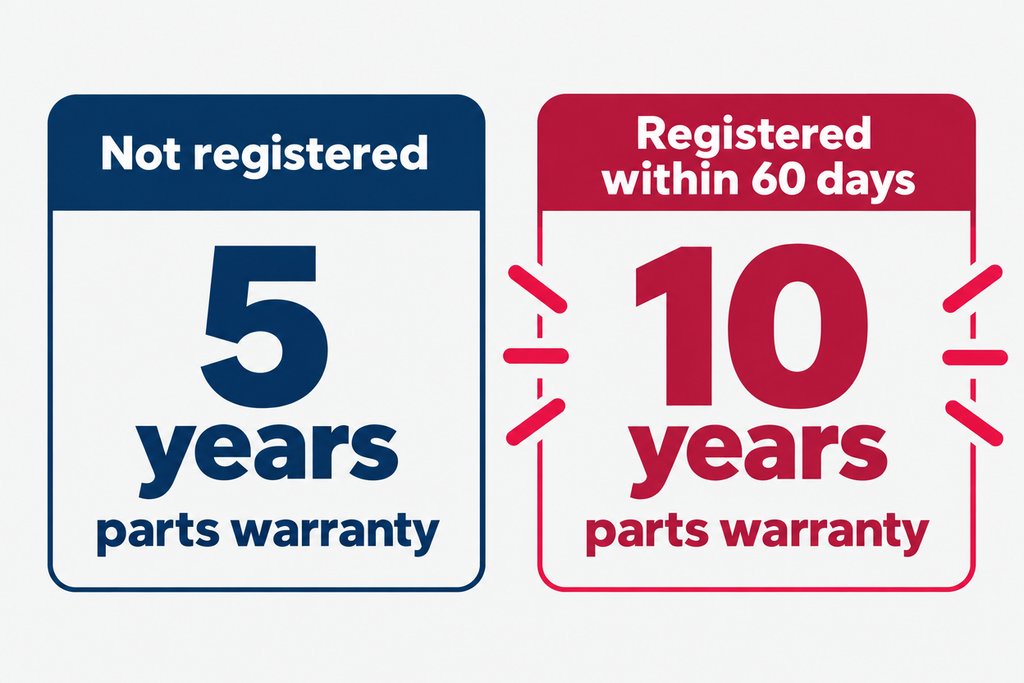
If you just bought a brand-new home from the builder, you have 60 days from closing to register the air conditioning and heating equipment with the manufacturer. Register in time and the parts warranty goes from five years to ten. Miss it and you’re stuck with five. Your AC and heating system is the most expensive equipment in your entire home. Registering it takes a few minutes online and gets you five more years of covered replacement parts.
I’ve made videos about this, and I still keep running into new homeowners who didn’t know about the deadline. Here at Spring Branch Air Conditioning & Heating, we’re an authorized Amana dealer, so I’ll use Amana’s terms as the example.
What does registering your HVAC equipment do?
Registering your HVAC equipment with the manufacturer doubles the parts warranty. Amana gives an unregistered air conditioner a 5-year parts limited warranty, and a 10-year parts limited warranty when you register it online within the 60 days. Registering doesn’t cost you anything.
Other brands set their own terms. Your exact terms are in your equipment’s warranty certificate, the manufacturer’s written warranty for your model.
When is the deadline: closing or move-in?
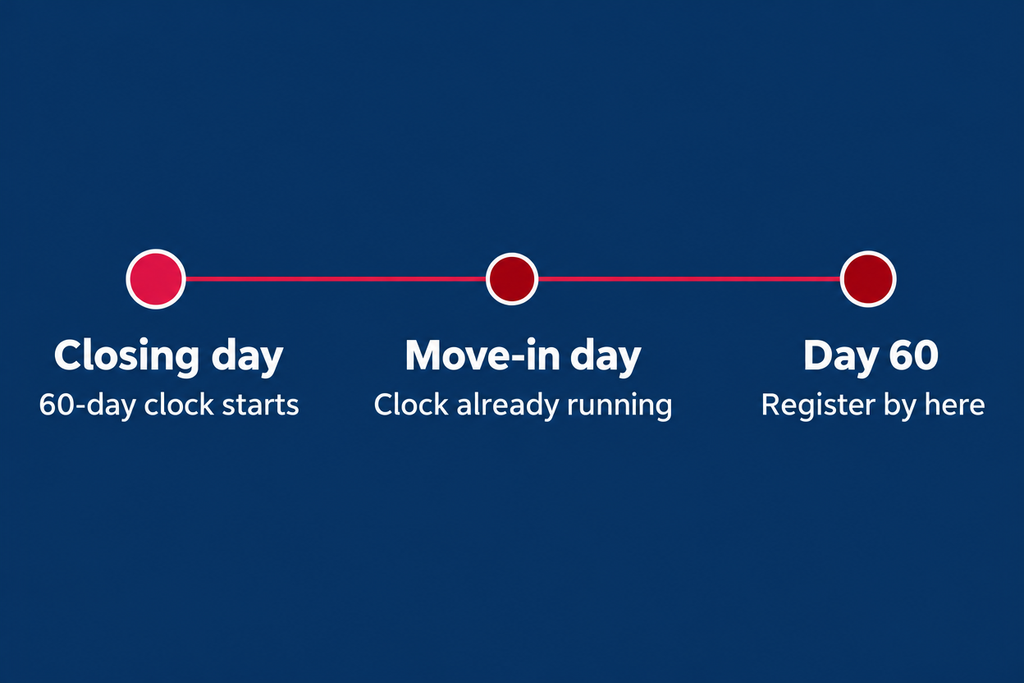
On a newly built home, the 60 days start the day you close, not the day you move in. A manufacturer’s warranty normally counts from the day the equipment is installed. On a new home, though, the builder’s crew installed the equipment weeks or months before you bought the house. So Amana counts from your closing date instead: “For units installed in a newly constructed residence, the installation date is the date the owner purchases the residence from the builder.”
That means if you close on the first of the month and move in three weeks later, three weeks of your 60 days are already gone.
How to register your HVAC equipment on a new home
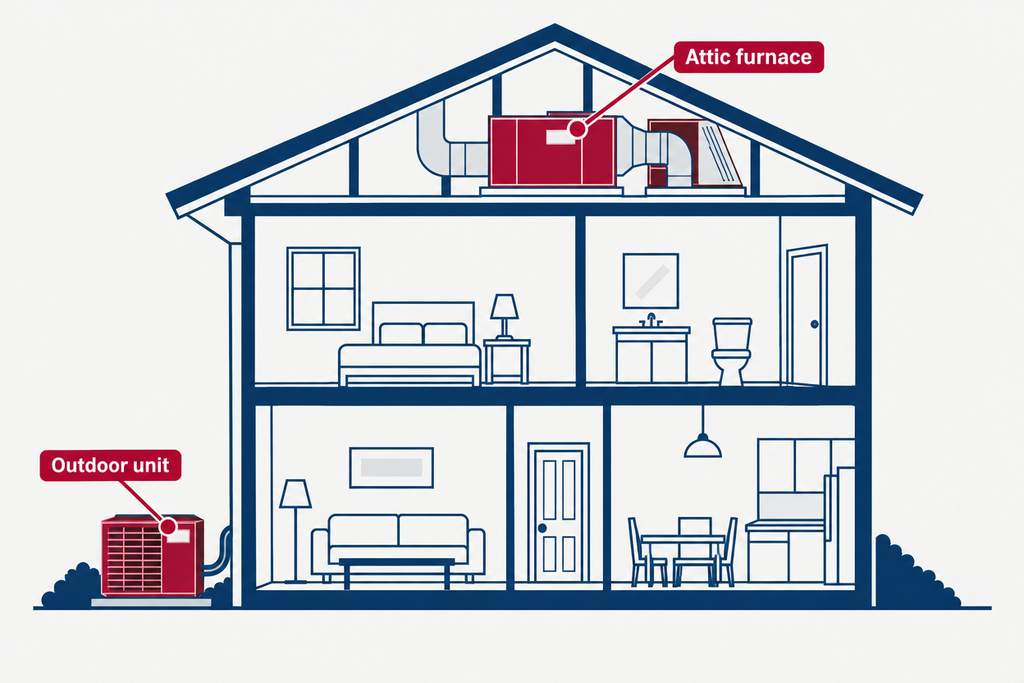
Registering is easy once you have the model and serial numbers. Finding those numbers is the hard part, because one label is outside and the furnace label is usually up in the attic.
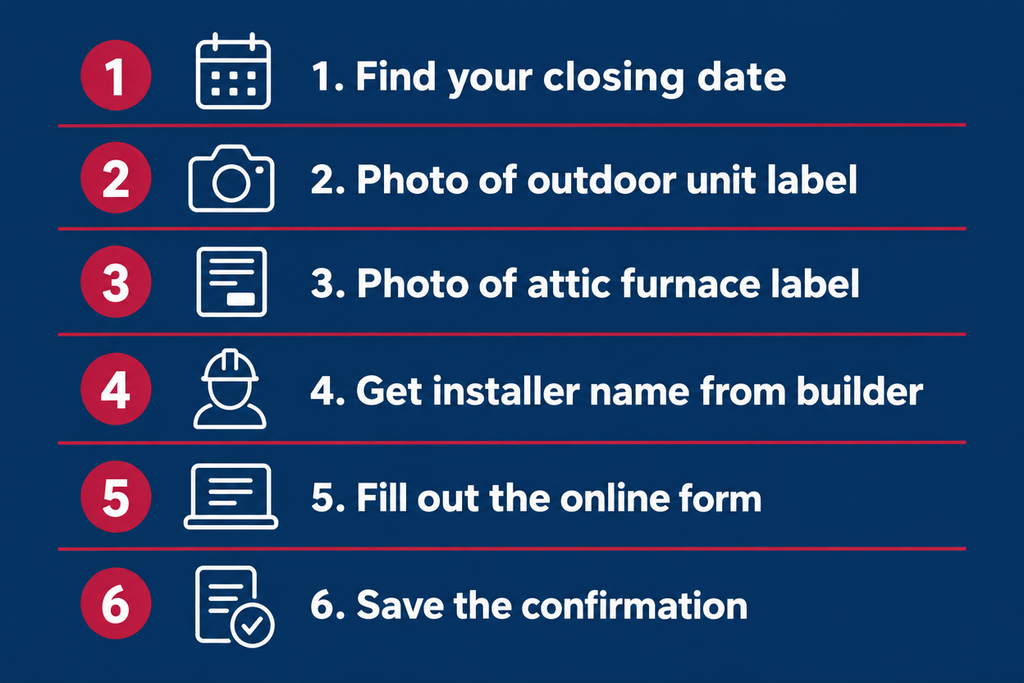
- Find your closing date. It’s on your closing paperwork. You’ll enter it as the installation date.
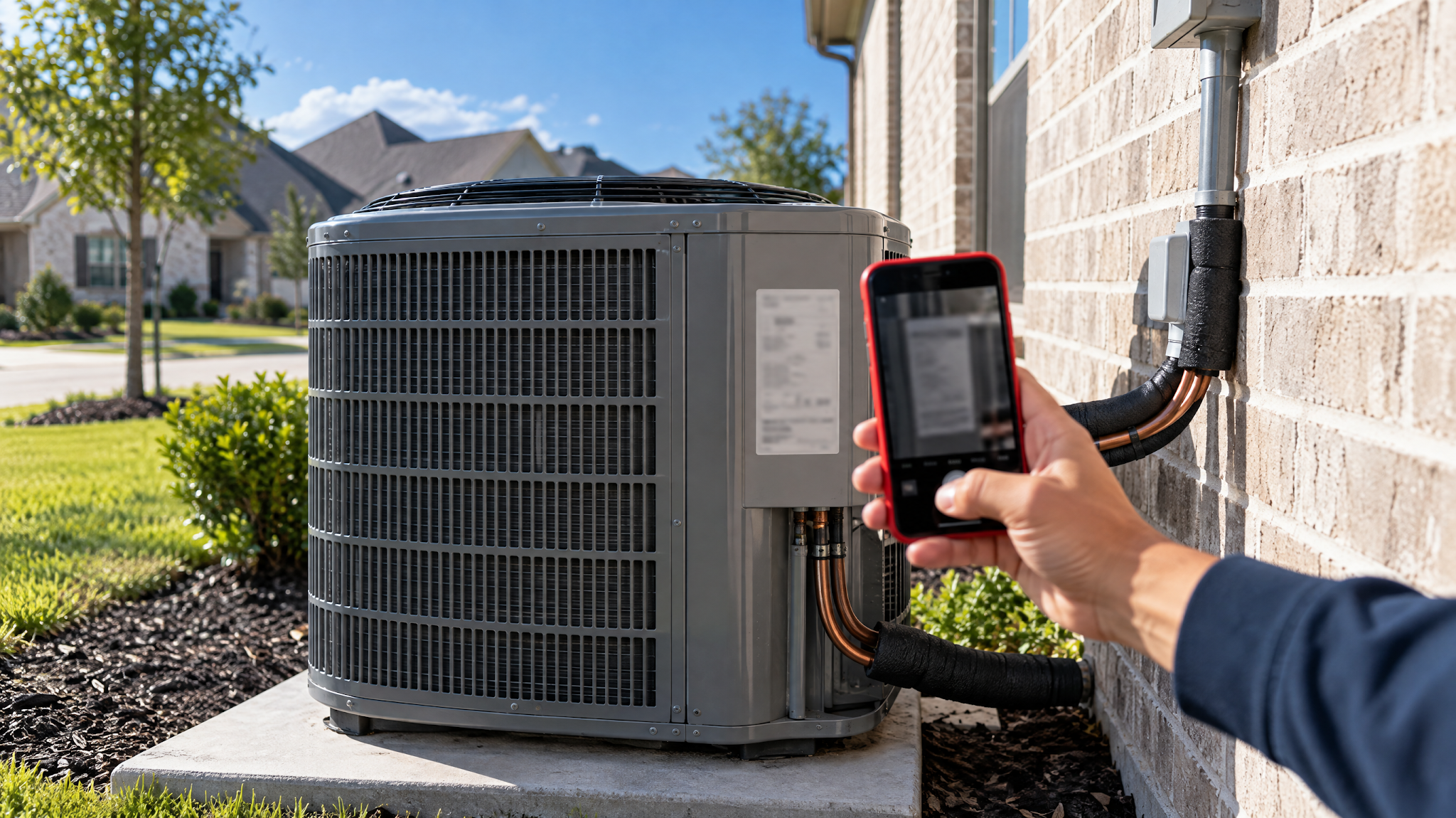
- Get the numbers off the outdoor unit. That’s the big box sitting outside. Look for the copper pipes that run from the unit into the house. On an Amana unit, the label is on the panel next to or above where those pipes connect. The exact spot varies from one unit to the next, so look around that area. Take a clear photo of the label.
- Get the numbers off the indoor equipment. In my experience, most Houston homes have the furnace and the indoor evaporator coil (the indoor half of your AC) up in the attic. On an Amana furnace, the label is on a side panel behind the front panel, so the front panel has to come off to read it. If you haven’t closed yet, photograph the outdoor and attic labels at your final walk-through, and you’ll have the model and serial numbers before the 60 days start.
- Know who installed it. The form asks for the installing contractor’s name and phone number. That’s the HVAC company your builder used. If it isn’t in your closing paperwork, ask the builder.
- Fill out the form. The brand name is on the outdoor unit’s label. If it’s Amana, go to Amana’s product registration page. Other brands have their own registration pages. Enter your name, address, phone, email, the installation date (your closing date), and the model and serial numbers. An Amana serial number is ten digits, so if you count more or fewer, check it against your photo.
- Save the confirmation. Keep it with your closing paperwork and any builder’s warranty.
With the numbers in hand, the form takes about three minutes. I made a short video on registering your system if you’d rather hear it from me.
What happens if you miss the 60-day window?
If you miss the 60 days, you keep the standard 5-year parts warranty. Amana says you must register within 60 days to get the added coverage, so registering late won’t get you the 10 years.
Does the manufacturer warranty cover labor?
The manufacturer’s warranty usually doesn’t include labor. Amana’s parts limited warranty pays for the replacement part, and your warranty certificate spells out what’s excluded. So if a covered part fails in year seven, expect the part to be covered and the labor to replace it to be your cost.
If your home came with a builder’s warranty, it may cover labor on the system for the first couple of years. Once that ends, labor on a repair is your cost. On equipment we install, we also offer extended warranties that add coverage beyond the manufacturer’s warranty.
What does a Texas builder warranty cover on the HVAC system?
A Texas builder’s warranty commonly covers the heating and air conditioning system for two years after closing. A common setup is one year on workmanship and materials, and two years on plumbing, electrical, heating and air conditioning. In Texas, a builder’s written warranty is optional, not required by state law, so your builder’s terms may be different, or there may not be one. Pull out your closing paperwork and check:
- Whether your home came with a builder’s warranty
- How long the HVAC coverage lasts
- Whether it covers labor on the HVAC system
- Whether it starts at closing
- How to file a claim
Here’s who covers what on a new home’s system:
| Who pays | For what | How long |
|---|---|---|
| Your builder (if you have a builder’s warranty) | Repairs to the system, often including labor | Commonly two years after closing (check yours) |
| The manufacturer | Parts only | 5 years from closing, or 10 if you register within 60 days |
| You | Labor on any repair | From the day the builder’s warranty ends (or from closing, if there isn’t one) |
Check with your builder before you pay for a repair
My client’s house was just under two years old, and the compressor on his AC had failed. A two-year-old unit and the compressor’s out. That’s no good. The repair was going to run him just under a thousand bucks.
I told him he might want to talk to his builder. He looked through his paperwork, made a few phone calls, and found out he was 18 days short of the two-year mark. His builder had a two-year labor warranty on all of their systems, counted from the day he closed on the house. He got the repair done for free.
Good for him, not good for me. I sent him to his builder instead of doing the job myself, because that saved him close to a thousand dollars. If your system has a problem in the first couple of years, check your builder’s warranty before you pay anybody, including us.
What should real estate agents and home inspectors tell buyers?
If you’re a real estate agent or home inspector working with someone buying a new build, tell them about the 60 days before they close. A lot of buyers don’t know about it. Here’s a short list you can pass along:
- You have 60 days from closing (not move-in) to register the AC and heating equipment with the manufacturer.
- Registering on time turns a 5-year parts warranty into 10.
- If the home came with a builder’s warranty, keep the paperwork. If the AC has a problem in the first couple of years, call the builder first.
- If you’d rather not do it yourself, a local HVAC company can register it for you.
Want us to register it for you?
If you’d rather not crawl around the attic looking for serial numbers, call us. We’ll come out, inspect the system to make sure it’s operating properly, find the model and serial numbers, and register it with the manufacturer for you. Once it’s registered, our service agreements cover the regular maintenance that keeps it running. Give us a call at (713) 937-6739 or reach out online. We’ll be happy to help.